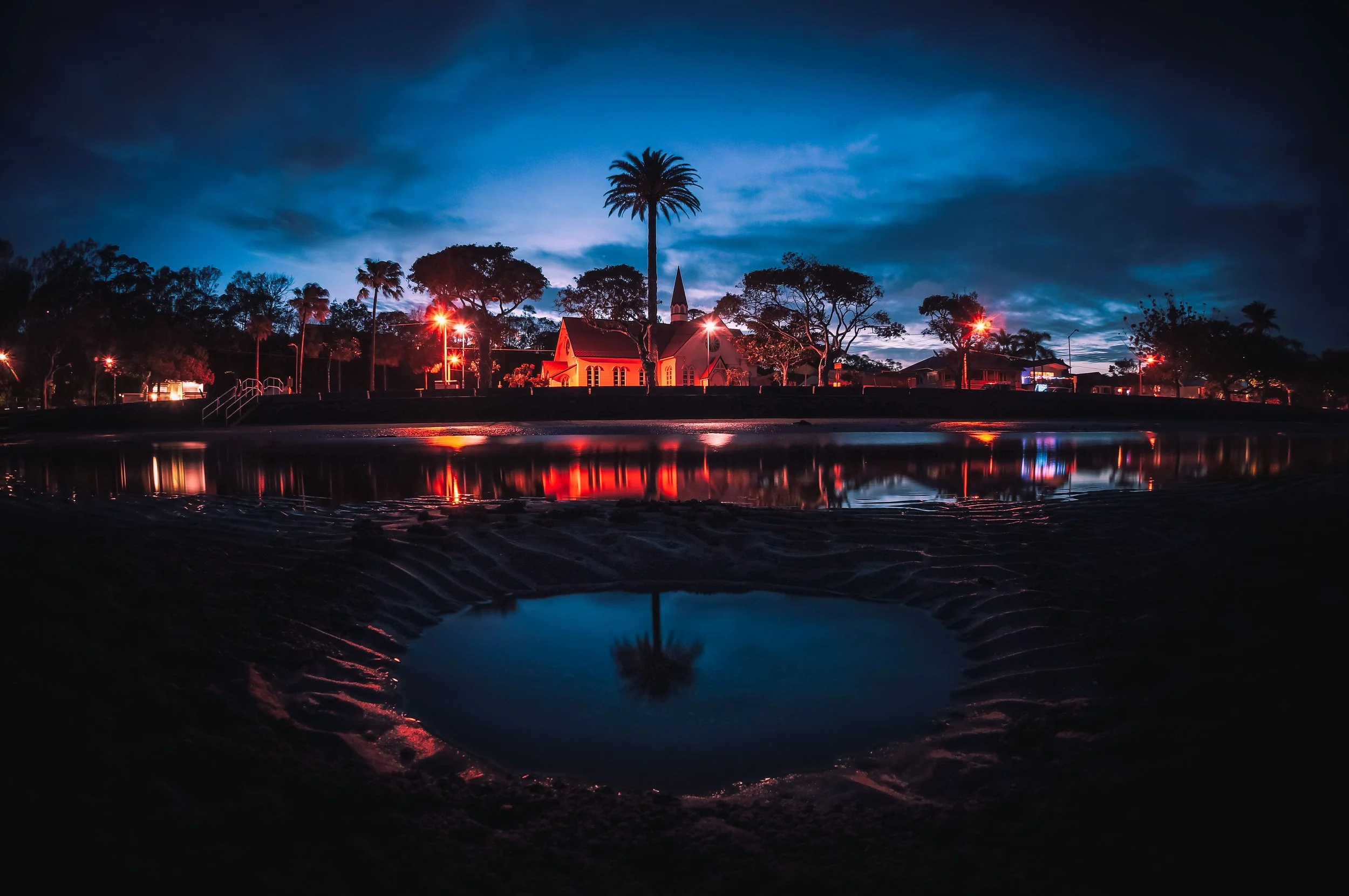
Twilight Reflections in a Stingray Hole
I came to call them mudflat meditations, the hour-long rambles I enjoyed early each morning for several years, tides permitting, across the rippled tracts of wet sand on the Sandgate foreshore. A 7-11 coffee-and-muffin combo on a waterfront bench, the glow of an emerging sun behind Moreton Island on the eastern edge of the bay, and my morning commute would begin. Shoes off, I was soon descending from the seawall to venture out, splashing through the tidal ponds of a freshly remodelled landscape, camera in hand, till the sun was bright. But this time
Image Date: 23 December 2014
I came to call them mudflat meditations, the hour-long rambles I enjoyed early each morning for several years, tides permitting, across the rippled tracts of wet sand on the Sandgate foreshore. A 7-11 coffee-and-muffin combo on a waterfront bench, the glow of an emerging sun behind Moreton Island on the eastern edge of the bay, and my morning commute would begin. Shoes off, I was soon descending from the seawall to venture out, splashing through the tidal ponds of a freshly remodelled landscape, camera in hand, till the sun was bright. But this time, for reasons I can’t recall, my ritual was beginning in early evening.
Twilight Reflections in a Stingray Hole, Sandgate, Brisbane, 2014
2014 was the year my occasional forays onto the flats became an essential part of each day, as necessary as breakfast or sleep. In July, as my relationship with an overseas girlfriend was breaking down, I was accused, falsely, of nefarious visa intentions, locked up with a dozen strangers in a backroom airport cell for 12 hours, and escorted by armed goons onto a plane and from her country. A relapse into functional depression followed. Prescribed mild antidepressants, I’d spend hours daily meandering along the waterfront in a vaguely pleasant (at first) haze of numbness. The mudflats were a place of solace and quiet drama. Soldier crabs scurried and tunnelled; seabirds foraged and fished. The turning tide carved fresh channels in its journey shoreward, seeping into and flooding the countless hundreds of stingray lies remaining from the previous high tide.
This was a rare evening mudflat image for me - after the magic of golden and then blue hours, you’re walking in ever-deepening darkness, photographic opportunities dry up, and there’s always the risk of tripping in one of those infernal fish holes! I used the tiny Sony NEX (probably my first, the 5N) and a small, plastic Gorillapod. A long exposure was required; from memory it was five seconds. Any longer and a tripod leg might start to sink. I love that I was able to capture the palm tree reflection, the sharp detail of the old Baptist church on the shore, and a suggestion of the contoured perimeter of the stingray lie. The blue of the sky and the captured seawater (a valuable habitat for juvenile prawns and fish) also rendered well, and I brought out its richness in my edit.
But mostly I enjoy the image of the rays (probably the estuary stingray, Hemitrygon fluviorum) quietly going about their timeless hunting strategy beyond the view of the humans on shore; squadrons of them gliding over the seabed, stirring up the sand with their winglike fins to expose the soldier crabs and worms they seek. Two worlds, side by side, each oblivious to the existence of the other.